Categoría

How Do You Prevent Bus Duct Joint Failures with Thermal Monitoring?

Over 70% of bus duct outages start at the joint. Learn how to prevent bus duct joint failures with thermal monitoring before costly faults escalate.
May 28th,2026 4 Puntos de vista

In high-current industrial distribution systems operating above 1,600A, the joint is statistically the most failure-prone component — not the busbar conductor, not the enclosure, not the insulation system. At ZHERUTONG, after manufacturing bus duct systems for industrial clients across Southeast Asia, the Middle East, and Europe, we've tracked a consistent pattern in field failure reports: over 70% of unplanned outages trace back to joint-level thermal degradation that went undetected until it escalated into a fault event. IEEE 3007.3 estimates that electrical equipment failures cost industrial plants an average of $260,000 per incident when accounting for lost production — and that figure doesn't include regulatory exposure, reputational damage, or the cascading effects on downstream process equipment.

This article is a technical walkthrough of why joint failures follow such a predictable pattern, and how continuous thermal monitoring — properly deployed and correctly threshold-engineered — changes the failure equation entirely. The structure moves from failure mechanism physics, through monitoring technology selection, to sensor placement strategy, alert threshold frameworks, and the integration of physical inspection protocols. It is written for electrical engineers and facility maintenance managers who already understand bus duct fundamentals and need actionable, field-tested guidance rather than another overview of busway technology.

Why Do Bus Duct Joints Fail More Often Than Any Other Component?

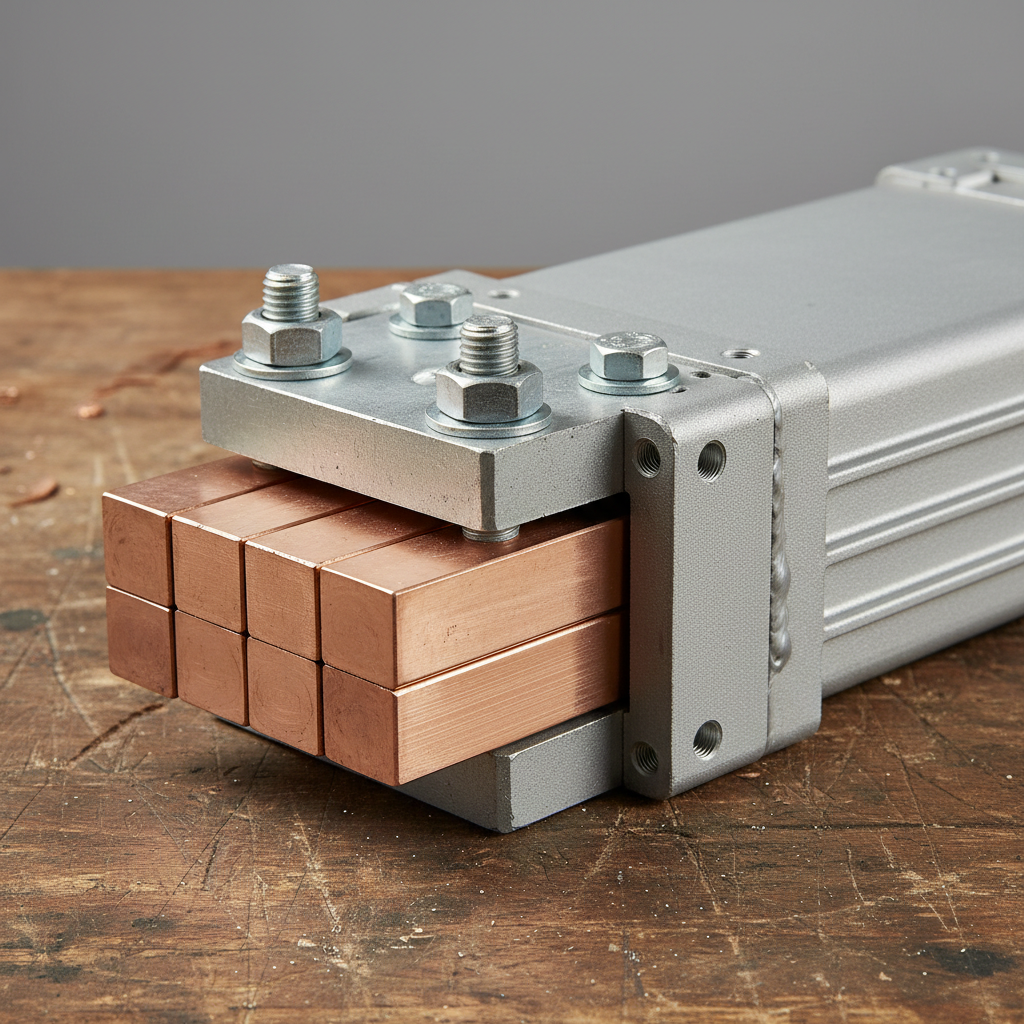
Bus duct joints concentrate mechanical stress, contact resistance variability, and thermal cycling effects into a single small interface — making them the statistically dominant failure origin in any bus duct system, regardless of conductor quality.

The physics explanation starts with contact resistance creep. Even a correctly torqued joint at installation develops micro-movement under repeated thermal expansion and contraction cycles. Copper expands at approximately 17 µm per meter per degree Celsius — on a 10-meter feeder run, that translates to millimeter-scale cumulative movement across thousands of thermal cycles. Each cycle relaxes bolt preload incrementally. As preload drops, contact area shrinks, and contact resistance rises.

The situation compounds at aluminum-to-aluminum or aluminum-to-copper interfaces through fretting corrosion. Where contact surfaces micro-slide against each other, aluminum oxide forms at the interface. Aluminum oxide carries roughly 10⁶ times the resistivity of the base metal — a film that is invisible to the naked eye can effectively double the joint's electrical resistance. This is not a gradual linear wear process. It is a self-reinforcing degradation spiral: higher resistance generates more I²R heat, which accelerates oxidation and anneals the contact surface, which raises resistance further. By the time a joint is running 40°C above ambient, it has typically already entered accelerated failure mode. Thermal runaway is not an endpoint — it is a phase the joint passes through on the way to arc fault.

Installation quality is a compounding variable that is consistently underestimated. ZHERUTONG's internal assembly QC data shows that joints assembled without calibrated torque wrench verification exhibit a 3.2 times higher thermal anomaly rate within the first 18 months of service compared to torque-verified joints. Under-torqued connections create uneven pressure distribution across the contact interface, concentrating current flow through micro-contact points that heat disproportionately. Misaligned joint plates produce similar results through a different mechanism.

Environmental factors operate independently and additively. Humidity ingress through degraded enclosure seals accelerates oxide formation. Vibration from adjacent rotating machinery introduces micro-movement that fretting corrosion thrives on. Harmonic distortion from variable-frequency drive (VFD) loads increases effective RMS current beyond what the nameplate load figure suggests, raising I²R heating at every joint in the affected section. In facilities where all three of these factors coexist — and they frequently do in petrochemical and heavy manufacturing environments — joint degradation timelines compress significantly.

How Does Thermal Monitoring Actually Detect a Failing Joint Before It Trips?

Thermal monitoring works because a degrading joint's elevated contact resistance converts electrical energy into heat at a rate proportional to I²R — making temperature the earliest measurable, non-invasive signal of joint deterioration, often detectable weeks or months before a fault occurs.

The physics link between resistance and detectable heat is worth quantifying precisely. At 2,000A, a joint with 0.5 mΩ of additional contact resistance dissipates 2,000 watts of excess heat (P = I²R = [2,000]² × 0.0005). That is not a subtle signal — it is a substantial thermal load concentrated in a small area. The relationship scales non-linearly with current, which is why high-ampacity systems above 2,500A are disproportionately vulnerable. A resistance anomaly that produces a barely detectable 3°C rise at 40% load may produce a 35°C rise at 95% load on the same joint. This load-dependency is critical: monitoring systems that evaluate absolute temperature without load normalization will generate false negatives at partial load conditions, which is precisely when a developing fault may go undetected for extended periods.

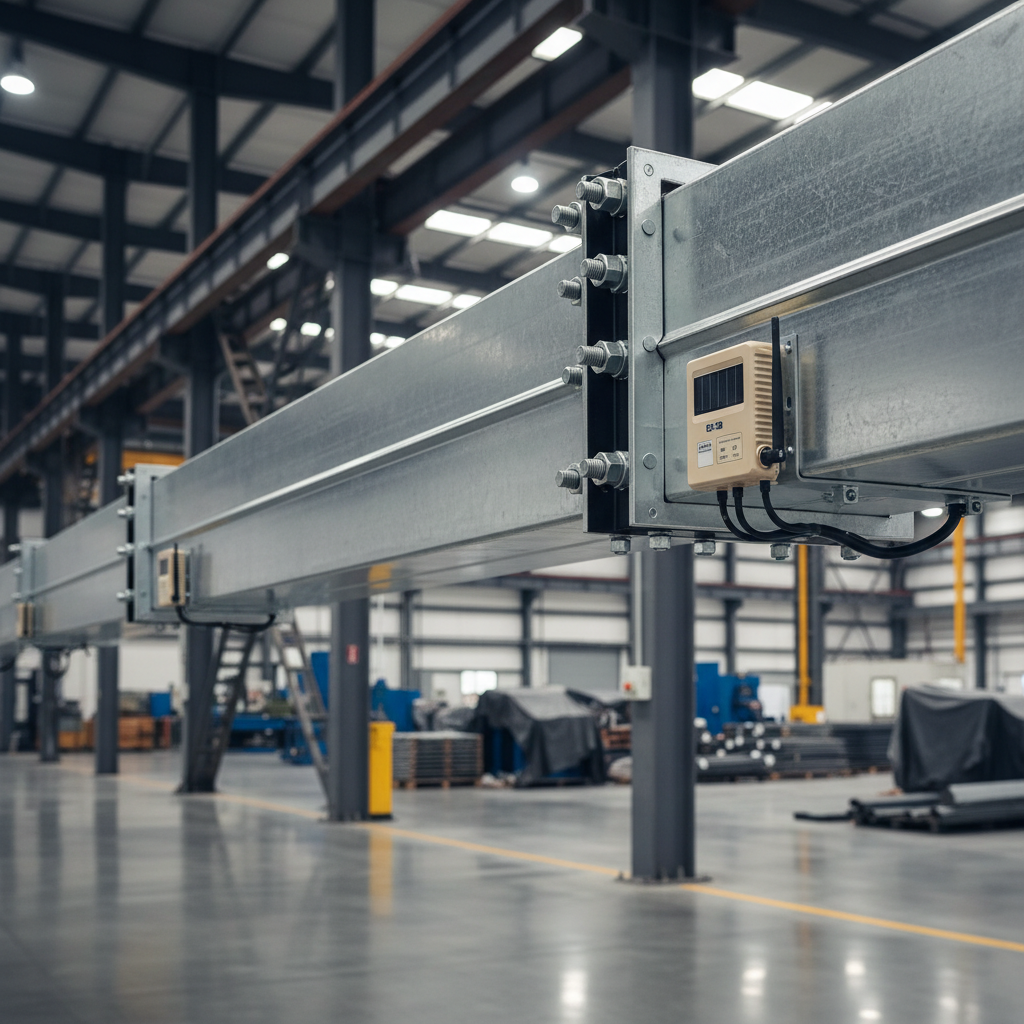
The sensor technology landscape offers several approaches, each with distinct operational tradeoffs. Infrared thermography conducted periodically provides point-in-time snapshots and is useful for scheduled inspections, but it is entirely blind to thermal events that develop and resolve between inspection cycles. Fiber optic distributed temperature sensing (DTS) offers continuous coverage and excellent EMI immunity, making it well-suited for high-voltage environments, though installation cost is higher and the technology requires careful routing along the bus duct run. Wireless RTD and thermocouple sensors placed directly at joint locations provide cost-effective targeted monitoring for known high-risk joints, with the caveat that sensor placement and EMI shielding must be engineered carefully. Permanently installed fixed-focal IR sensors are increasingly specified for critical industrial installations where continuous real-time dashboard visibility is required without any human access to the monitored location.

The case for continuous monitoring over periodic thermography is not merely theoretical. Thermal runaway can progress from early-stage anomaly to fault condition in under 72 hours under high-load conditions. A quarterly thermography schedule creates a 90-day detection blind window. In our assessment of a petrochemical processing facility in Malaysia — detailed in the case study section of this article — the critical thermal event developed over 58 hours, entirely within a scheduled inspection gap. No continuous monitoring was installed. The outcome was a phase-to-phase arc fault, 19 hours of unplanned downtime, and over $340,000 in combined repair and production loss costs.

Effective thermal monitoring requires a properly established baseline. Delta-T — the temperature differential above a load-normalized baseline at the same joint location and equivalent current draw — is a more reliable alert trigger than absolute temperature thresholds. We recommend establishing baseline profiles at 50%, 75%, and 100% of rated load during commissioning, and recalibrating those baselines at minimum twice per year to account for seasonal ambient temperature variation and facility load profile shifts.

Where Should Thermal Sensors Be Positioned for Maximum Joint Coverage?

Sensor placement should be determined by a risk-weighted map of the bus duct system, prioritizing joints under the highest mechanical and thermal stress — not distributed uniformly, which wastes budget and dilutes alert sensitivity.

Effective sensor deployment begins with a tiered risk classification of every joint in the system. Tier 1 joints — those requiring continuous monitoring — include transition joints between horizontal and vertical runs, where gravity-assisted bolt relaxation is a documented mechanism. Joints within 2 meters of transformer LV terminals sit in the highest ambient heat zone of any distribution system and carry the highest harmonic content. Tap-off plug-in joints experience more frequent mechanical engagement and disengagement than any other joint type, making them statistically more likely to develop contact surface degradation. Any joint in an area with sustained ambient temperatures above 40°C has reduced thermal headroom, meaning smaller resistance increases produce proportionally larger temperature anomalies relative to safe operating limits. Joints in sections with significant VFD loads upstream require particular attention because harmonic heating compounds I²R losses in ways that standard load calculations do not capture.

Tier 2 joints — candidates for periodic monitoring supplemented by quarterly IR thermography — include joints at directional changes such as elbows and offsets, where mechanical stress concentration occurs. Joints in sections exceeding 10 years of continuous service life warrant elevated monitoring frequency regardless of their location, as do any joints that have been field-repaired or re-torqued, since re-torqued joints frequently indicate a prior contact surface event that may have left residual oxide contamination.

Tier 3 reference sensors, placed at mid-span conductor locations away from joints, serve as ambient and load-baseline references for cross-validating joint sensor readings. Enclosure external surface sensors provide an additional cross-check layer.

The following placement priority matrix reflects ZHERUTONG's recommended deployment framework for industrial installations:

Joint Location

Risk Tier

Recommended Sensor

Review Trigger

LV transformer terminal joints

1

Permanent IR / RTD

Continuous

Horizontal-to-vertical transitions

1

Wireless RTD

Continuous

Tap-off plug-in joints

1

Fixed IR sensor

Continuous

Elbow/offset joints

2

RTD or periodic IR

Quarterly

Joints >10 years service

2

RTD

Monthly

Mid-span reference points

3

Thermocouple

Baseline only

For critical industrial runs above 2,500A on continuous duty, we recommend a minimum of one thermal sensor per joint at all Tier 1 locations. For standard industrial runs between 800A and 2,500A, targeted Tier 1 continuous coverage combined with quarterly IR thermography for Tier 2 joints represents a cost-effective hybrid approach that captures the majority of failure risk without over-instrumenting lower-priority locations.

Sensor data should feed directly into the facility's existing SCADA or building management system infrastructure rather than operating as a standalone monitoring island. Alert thresholds should trigger automated maintenance work orders, not just alarm panels that require a human to be present to observe them.

What Alert Thresholds Should Trigger Inspection or Shutdown?

Threshold engineering is not a single number — it requires a three-tier alert architecture based on delta-T above load-normalized baselines, because absolute temperature limits alone produce both false alarms at high load and missed detections at partial load.

The limitation of absolute thresholds is fundamental, not incidental. A joint running at 85°C at 100% load may be operating within acceptable parameters for a well-designed system. The same joint at 85°C at 50% load is critically anomalous — the resistance increase required to produce that temperature at half current is far more severe. IEC 60439 and ANSI/UL 857 both set maximum temperature rise limits for joints (typically 55°C above a 40°C ambient for bolted connections), but these are design compliance limits intended for type testing, not predictive maintenance triggers. Using compliance limits as operational alert thresholds is a common and consequential error.

ZHERUTONG's recommended three-tier delta-T framework, developed from field deployment experience across multiple industrial sectors, operates as follows:

Alert Level 1 — Investigation Trigger: A delta-T of +15°C above the load-normalized baseline at the same joint location. At this level, schedule a visual inspection and manual IR thermography within five business days. Increase monitoring logging frequency to hourly. This level typically indicates early-stage resistance creep or the beginning of oxide layer formation — entirely correctable if caught here.

Alert Level 2 — Maintenance Action Required: A delta-T of +30°C above baseline. Reduce load on the affected section if operationally feasible. Schedule joint inspection and re-torque within 48 hours. Prepare contingency plans for section isolation. At this level, the joint is in active degradation and the thermal runaway feedback loop may already be operating.

Alert Level 3 — Immediate Shutdown Threshold: A delta-T of +55°C above baseline, or an absolute joint temperature exceeding 115°C regardless of load. Isolate the section immediately. Do not attempt re-torque under load — at this temperature, arc flash risk during any physical intervention is elevated. The joint has entered or is approaching thermal runaway and requires emergency intervention.

Rate-of-rise alerting operates as a complementary and in some cases more sensitive trigger than delta-T alone. A joint temperature rising faster than 2°C per hour at stable load conditions indicates a discrete failure event — bolt fracture, sudden contact surface collapse, or enclosure seal failure allowing humidity ingress — rather than gradual degradation. Rate-of-rise alerts at this threshold should be treated with the urgency of a Level 2 alert regardless of the current absolute delta-T value.

Baselines require recalibration at minimum twice per year, aligned with peak summer load season and winter baseline conditions, and immediately following any significant load configuration change in the facility.

Does Thermal Monitoring Replace Traditional Joint Inspection, or Work Alongside It?

Thermal monitoring and physical inspection are not substitutes for each other — they detect different failure signatures, and the most resilient maintenance strategy integrates both into a single structured protocol.

Continuous thermal monitoring excels at detecting developing resistance creep between inspection intervals, capturing thermal events during off-hours or peak load periods when no personnel are present, and covering joints in enclosed or inaccessible locations where visual inspection is impractical without planned outage time. These are precisely the failure modes that have historically gone undetected until they became fault events.

Physical inspection catches what thermal monitoring cannot: mechanical damage to joint hardware including cracked joint plates and corroded bolt threads, insulation degradation around joint areas, contamination from oil mist or conductive dust that has not yet caused measurable resistance increase, and incorrect joint assembly that can only be confirmed through physical access and torque verification. Neither method alone provides complete coverage.

A structured busbar joint weak points inspection checklist for industrial facilities should include, at minimum, the following verification items for each physical inspection cycle:

  • Verify bolt torque values against manufacturer specification using a calibrated torque wrench — not tactile estimation
  • Inspect joint plate contact surfaces for discoloration, pitting, or oxide film formation
  • Check enclosure seal integrity at joint locations to confirm IP rating is being maintained
  • Measure contact resistance with a micro-ohmmeter and flag any reading more than 20% above the commissioning baseline value
  • Inspect insulation boots and sleeves for cracking or heat damage indicating prior thermal events
  • Verify joint alignment — misalignment indicates thermal movement or improper installation
  • Document thermal sensor readings at the time of physical inspection for baseline cross-validation
  • Check for signs of fretting corrosion, identifiable as reddish-brown powder residue at aluminum-to-aluminum contact interfaces

This busbar joint weak points inspection checklist for industrial facilities is most effective when inspection findings are cross-referenced against the thermal monitoring trend data from the same joint location. A joint showing stable thermal readings but physical evidence of fretting corrosion is a candidate for preventive contact surface treatment before resistance rise becomes detectable. A joint showing a Level 1 thermal alert with no visible physical anomaly warrants increased monitoring frequency and load reduction consideration while the source of resistance increase is investigated.

The recommended integrated maintenance cadence: continuous thermal monitoring operating at all times; monthly review of thermal trend data by the facility electrical team; quarterly physical inspection of all Tier 1 joints; annual full-system inspection covering Tier 2 and Tier 3 joints; and immediate physical inspection triggered by any Level 1 or above thermal alert, regardless of where it falls in the scheduled inspection calendar.

What Happened When a Petrochemical Facility Ignored Joint Thermal Data — and How Was It Resolved?

A real incident from a petrochemical processing plant in Southeast Asia illustrates exactly how fast joint thermal degradation escalates when monitoring data is absent — and what a properly structured thermal response protocol would have prevented.

The client was a petrochemical processing facility in Malaysia operating a 3,200A bus duct distribution system supplying motor control centers for continuous-process pumping equipment. The facility's maintenance program relied on periodic IR thermography conducted on a 90-day schedule. No continuous monitoring was installed.

Routine thermography was conducted with no anomalies flagged. Thirty-four days later, a horizontal-to-vertical transition joint on the main feeder run began developing elevated resistance. The contributing factors were bolt relaxation compounded by humidity ingress through a degraded enclosure seal — a combination that created the conditions for accelerated oxide formation at the contact interface. Over the following 58 hours, joint temperature rose from 42°C to 97°C. No alert was generated because no continuous monitoring existed. The thermal runaway feedback loop operated without interruption. The joint reached a critical threshold, a phase-to-phase arc fault occurred, and the section failed, simultaneously tripping the main feeder and shutting down three process pumps. Unplanned downtime totaled 19 hours. Combined production loss and repair costs exceeded $340,000.

ZHERUTONG was engaged for post-incident engineering assessment and remediation. Our team conducted a full joint thermal risk mapping of the 280-meter bus duct run, identifying 7 Tier 1 joints requiring immediate re-torque and contact surface cleaning. We specified and supported the installation of permanent wireless RTD sensors at all 12 Tier 1 joint locations, integrated into the facility's existing SCADA infrastructure. The three-tier delta-T threshold framework described in this article was implemented as the operational alert protocol. We also delivered a customized busbar joint weak points inspection checklist for industrial facilities tailored to the specific joint types, conductor materials, and environmental conditions present at that installation.

At a 14-month follow-up assessment, two Level 1 thermal alerts had been triggered. Both were investigated and resolved before reaching Level 2 — one required a re-torque, the other required enclosure seal replacement. Zero unplanned outages attributable to joint failure had occurred in the intervening period. The facility maintenance team reported a measurable reduction in corrective maintenance labor hours on the bus duct system, reflecting the shift from reactive fault response to proactive condition-based intervention.

The 58-hour window between the onset of detectable thermal anomaly and the arc fault event is the operational reality that makes continuous monitoring non-optional for high-ampacity critical distribution systems. That window is wide enough to prevent the failure entirely — but only if the monitoring infrastructure exists to see it.

What Are the Most Frequently Asked Questions About Bus Duct Joint Thermal Monitoring?

How Often Should Thermal Monitoring Baselines Be Recalibrated?

Baselines should be recalibrated at minimum twice per year and after any significant load change — seasonal temperature variation and facility load profile shifts both affect what constitutes a normal joint temperature at a given current level.

In practice, facilities running continuous-process operations often see meaningful load profile changes more frequently than twice annually. Any time a major piece of process equipment is added, removed, or reconfigured upstream or downstream of a monitored bus duct section, the load-normalized baseline for affected joints should be re-established before the delta-T threshold system is relied upon for alert generation.

Can Thermal Monitoring Be Retrofitted to an Existing Bus Duct System?

Yes — wireless RTD and fixed IR sensor solutions can be retrofitted to most existing enclosed bus duct systems without requiring section isolation, though access to joint locations may require brief planned outages for sensor installation.

The physical installation of wireless sensors at joint locations typically requires access to the joint area, which in many enclosed bus duct configurations means a short planned outage window. In systems where joints are accessible via removable inspection panels, retrofit installation can often be completed without full section de-energization. The SCADA integration work — configuring data feeds, alert thresholds, and work order triggers — can proceed in parallel with sensor installation and does not require any system downtime.

What Is the Minimum Delta-T That Should Trigger a Maintenance Investigation?

A delta-T of +15°C above the load-normalized baseline at the same joint location is the recommended Level 1 investigation trigger — below this threshold, variation is typically attributable to load fluctuation or ambient temperature change rather than joint degradation.

It is important to note that this threshold applies to delta-T calculated against a properly established, load-normalized baseline. Facilities that have not established commissioning baselines at multiple load levels cannot reliably apply this threshold without first conducting a baseline characterization exercise, which typically requires 30 to 60 days of monitored operation across varying load conditions.

Are Aluminum-to-Copper Transition Joints at Higher Risk Than Same-Material Joints?

Yes — dissimilar metal joints introduce galvanic corrosion risk and differential thermal expansion rates that accelerate contact resistance creep, making them statistically higher-risk than same-material joints and candidates for Tier 1 monitoring regardless of location.

Aluminum expands at approximately 23 µm/m·°C while copper expands at approximately 17 µm/m·°C. Over thousands of thermal cycles, this differential produces cumulative micro-sliding at the contact interface that same-material joints do not experience to the same degree. Proper transition joint design using bimetallic transition plates and silver-plated contact surfaces mitigates but does not eliminate this risk.

How Does Harmonic Distortion from VFD Loads Affect Joint Temperature?

VFD-generated harmonics increase the RMS current above the fundamental-frequency value, effectively increasing I²R heating at joints beyond what the nameplate load current suggests — systems with significant VFD loads should apply a harmonic derating factor when setting thermal alert thresholds.

The practical implication is that a bus duct section nominally loaded to 70% of rated current may be experiencing effective I²R heating equivalent to 85% or higher of rated current if the load profile is dominated by VFD-driven motors. Thermal monitoring baselines established without accounting for harmonic content will underestimate normal joint temperatures, potentially causing the delta-T alert framework to generate false negatives at the very load conditions where joint degradation is most likely to accelerate.

Is Your Bus Duct Joint Monitoring Strategy Ready for Your Next High-Load Cycle?

If your current maintenance protocol relies solely on periodic thermography or scheduled inspection, there is a statistical probability that a joint failure is already developing in your system right now — undetected, between inspection intervals.

The gap between having a maintenance program and having a monitoring strategy that catches failures before they become faults is exactly where most industrial electrical failures occur. Periodic inspection, however well-executed, cannot close a 90-day detection window against a failure mode that can progress to arc fault in under 72 hours. Continuous thermal monitoring, properly deployed with load-normalized baselines and a three-tier alert architecture, changes the detection timeline from weeks-after to days-before.

At ZHERUTONG, our engineering engagement with industrial clients goes beyond product supply. We support facilities from joint risk mapping through sensor specification, threshold framework development, and inspection protocol design — work grounded in direct manufacturing experience and field assessment data across high-current installations in petrochemical, heavy manufacturing, data center, and utility environments. Whether you are specifying a new bus duct system with integrated monitoring from the outset, retrofitting continuous monitoring to an existing installation, or developing a facility-wide approach to building resilience into your power distribution systems, we can provide technical input that is specific to your system configuration and operational conditions.

Send your project requirements, system drawings, or technical specifications to our engineering team at rtdq@rtbusway.com. We respond with application-specific recommendations, not generic product sheets.


CONTACT US

If you have any queries, get in touch today! Don't hesitate. We try to take the extra step for our customer satisfaction.
First Name*
Company Name*
Email*
Last Name
Country
Message*
Leave a message
First Name*
Company Name*
Email*
Last Name
Country
Message*