Categoría

Why Specify A Custom Busbar Support Insulator For High Current Switchgear Applications?

Off-the-shelf components fail under extreme fault conditions. Learn why a custom busbar support insulator for high current switchgear applications ensures safety and compliance.
May 29th,2026 7 Puntos de vista

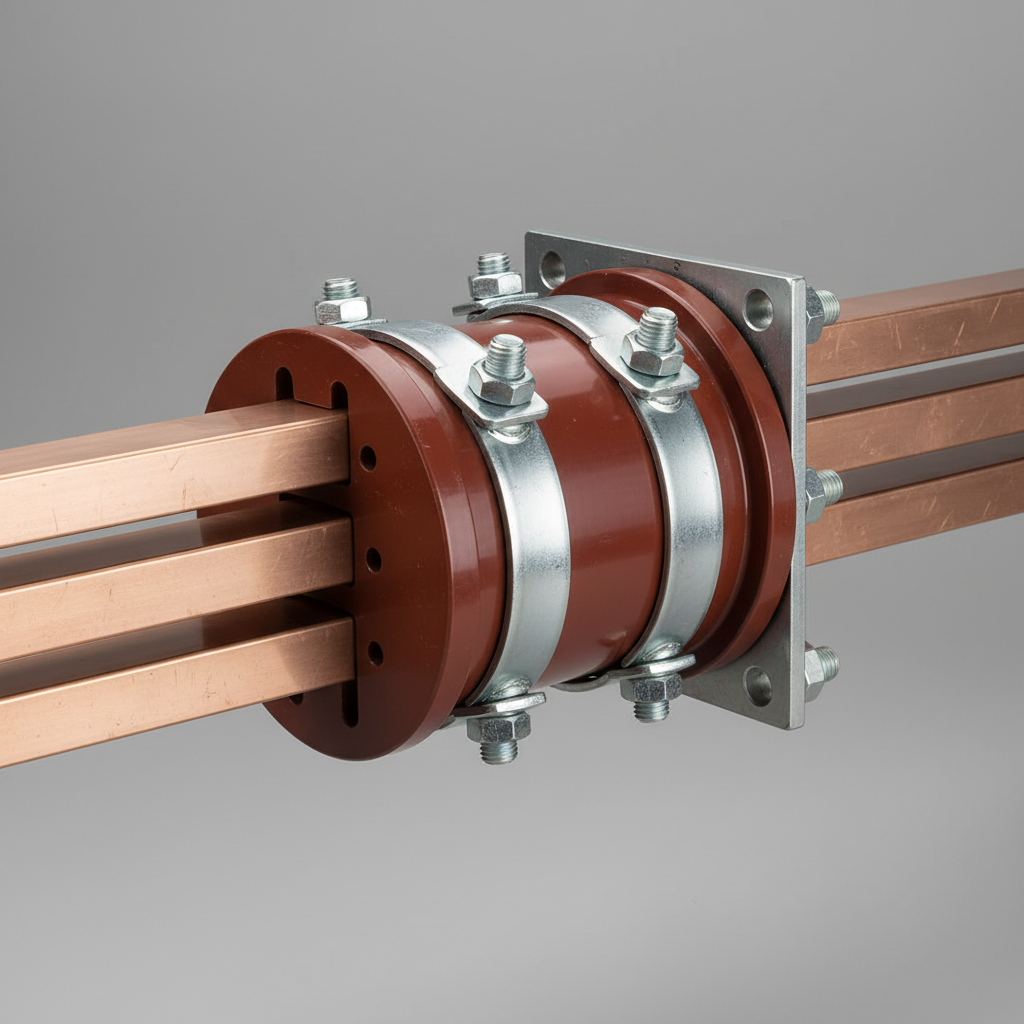
As a premier busbar support insulator manufacturer, ZHERUTONG has spent decades analyzing the catastrophic realities of industrial power distribution failures. In heavy-duty electrical infrastructure, the margin for error is non-existent. Procurement officers and senior electrical engineers frequently encounter a critical reality: relying on off-the-shelf, mass-produced insulation components often compromises the safety, longevity, and compliance of high-capacity systems. When a massive fault occurs, the infrastructure is subjected to violent physical and thermal extremes that standard components simply were not engineered to survive. This inherent vulnerability introduces immense risk to high-value assets and human life. The primary focus of modern electrical panel design must therefore shift toward absolute structural integrity and electrical isolation under massive electro-dynamic stress. Achieving this level of reliability necessitates specifying a custom busbar support insulator for high current switchgear applications. By engineering the insulation infrastructure to match the exact spatial, thermal, and mechanical demands of a specific panel, OEMs can eliminate the hidden failure points that plague generic installations.

What Causes Standard Insulator Mechanical Failures?

Standard insulators fail under extreme electro-dynamic forces because their generic geometric designs and standard thread inserts cannot withstand the specific torsional and tensile stresses generated during high-current fault conditions.

To understand why red-ocean, mass-produced insulators fail in heavy industrial scenarios, one must examine the physics of high-current electrical environments. During a short-circuit event, the peak fault current creates a violent magnetic repulsion or attraction between parallel busbars, governed by the Lorentz force. This force is directly proportional to the square of the peak fault current and inversely proportional to the distance between the phase conductors. In a fraction of a second, the copper or aluminum busbars attempt to violently separate or crash together. Standard off-the-shelf insulators are typically manufactured with generic geometric profiles and shallow thread inserts designed for low-tier commercial applications. When subjected to the immense cantilever loads of a high-current fault, these generic designs lack the structural density to hold the busbars in place.

Exclusive ZHERUTONG laboratory testing data reveals the stark reality of these limitations. In our high-power testing facility, we subjected a series of standard, market-available multi-pole supports to asymmetrical fault currents exceeding 85kA. High-speed camera footage and post-test stress analysis demonstrated that within the first three cycles of the fault, the internal brass inserts of the standard insulators began to yield. As the electro-dynamic stress peaked, the generic polyamide and low-grade composite materials suffered catastrophic shear failure at the base. The mounting threads were completely ripped from the polymer matrix, and the insulators cracked laterally, allowing the energized busbars to break loose and cause a dead short to the grounded enclosure.

These findings underscore a critical paradigm shift for industrial buyers. Procurement officers must shift their focus from the initial unit cost of an insulator to its mechanical survivability. Saving a fraction of a budget on standard supports is a false economy when a single mechanical failure under fault conditions can result in the total destruction of a multi-million-dollar switchgear lineup, extensive facility downtime, and severe safety hazards. Investing in robust, precisely engineered supports is a fundamental requirement for heavy industrial infrastructure.

How Do Material And Ratings Intersect?

The intersection of material properties and electrical ratings dictates system survivability, making our comprehensive BMC busbar support insulator short circuit withstand rating selection guide an essential tool for engineers.

The correlation between raw materials and electrical performance is the foundational pillar of switchgear safety. An insulator is not merely a physical spacer; it is a critical dielectric barrier that must maintain its insulating properties while under immense mechanical and thermal strain. The raw material dictates the dielectric strength, the tracking resistance, and the mechanical density of the final product. When electrical engineers design high-current switchgear, they are bound by strict international standards regarding clearance and creepage distances. Clearance is the shortest distance through the air between two conductive parts, while creepage is the shortest path along the surface of the insulating material.

If an insulator is manufactured from a low-grade material with poor tracking resistance, the required creepage distance increases significantly to prevent surface electrical discharges, especially in polluted industrial environments. Conversely, utilizing high-grade materials allows for more compact panel designs without sacrificing safety. To navigate this complex intersection, ZHERUTONG developed a proprietary BMC busbar support insulator short circuit withstand rating selection guide. This document serves as the industry benchmark for matching material density, structural geometry, and fault current requirements.

By utilizing our BMC busbar support insulator short circuit withstand rating selection guide, engineers can precisely calculate how specific material properties will behave under their exact system voltage and prospective fault current. The guide details how variations in material composition directly impact the clearance and creepage distances required in high-current switchgear, ensuring that every custom design meets or exceeds regulatory compliance while optimizing the internal footprint of the electrical cabinet.

Why Is BMC Superior For Switchgear?

BMC is superior because its thermoset fiberglass-reinforced composition provides unmatched dielectric strength, flame retardancy, and structural rigidity under continuous heavy thermal loads.

Bulk Molding Compound stands apart from standard thermoplastics due to its unique chemical structure. Standard polyamides or cast resins often soften, warp, or degrade when exposed to continuous heavy thermal loads generated by high-current transmission. Our Chief Materials Engineer at ZHERUTONG explains this phenomenon clearly: "Unlike standard thermoplastics that experience molecular relaxation under sustained thermal stress, our high-density Bulk Molding Compound maintains its cross-linked molecular structure even at elevated operating temperatures. This thermosetting property prevents dimensional warping and ensures the insulator retains its mechanical yield strength during a fault, precisely when the switchgear needs it most."

Furthermore, specific industrial metrics validate the superiority of BMC in enclosed switchgear environments. Flame retardancy is non-negotiable, and our custom BMC formulations consistently achieve UL94-V0 flame ratings, meaning combustion stops within ten seconds after two applications of ten seconds each of a flame. Additionally, the Comparative Tracking Index of our BMC materials exceeds 600 volts, providing exceptional tracking resistance. This is critical for preventing arc flashes across the surface of the insulator in humid, dusty, or highly polluted industrial environments where standard porcelain or low-grade plastics would rapidly fail.

How To Determine Short Circuit Ratings?

You determine the required rating by calculating the peak asymmetrical fault current of your specific switchgear network and matching it with our certified laboratory test curves.

Determining the exact short-circuit withstand capacity required for an installation is a rigorous engineering process. We help OEM clients calculate dynamic forces by first identifying the prospective symmetrical RMS fault current of their network. From there, we calculate the peak asymmetrical fault current, taking into account the power factor of the system. Once the peak current is established, we analyze the spatial layout of the busbars, specifically the center-to-center distance between phases and the mounting pitch between the supports.

Using these parameters, we calculate the maximum electro-dynamic force exerted per meter of busbar. This calculated force is then cross-referenced with the mechanical cantilever strength data provided in our certified laboratory test curves. To prove a custom insulator's short-circuit withstand capacity, ZHERUTONG utilizes extreme testing protocols. In third-party accredited laboratories, our custom supports are subjected to brutal conditions, such as applying 100kA to 120kA peak currents for a duration of 1 to 3 seconds. The insulators must hold the busbars perfectly in place without any micro-fractures in the material matrix or deformation of the threaded inserts, proving their absolute reliability before they are ever installed in a client's facility.

How Does Customization Solve Engineering Issues?

Customization solves complex engineering issues by adapting the insulator's mounting pitch, creepage profiles, and insert thread depth to fit unique spatial and electrical constraints perfectly.

In the realm of modern industrial power distribution, the demand for compact, highly efficient infrastructure frequently clashes with the limitations of standardized components. Customization demonstrates our deep technical capability in solving bespoke spatial and electrical problems that off-the-shelf products simply cannot address. As a dedicated busbar support insulator manufacturer, ZHERUTONG understands that every switchgear layout has unique thermal dynamics and physical constraints. When engineers attempt to force standard insulators into non-standard spaces, they often compromise the structural integrity of the entire panel.

We address these challenges by customizing specific parameters based on the exact needs of the project. This includes engineering non-standard heights to align perfectly with tiered busbar systems, ensuring a perfectly level run that prevents undue stress on the copper joints. We also customize the internal hardware, utilizing specialized heavy-duty brass or stainless steel inserts designed for significantly higher torque tolerance and pull-out strength. For compact switchgear cabinets where space is at an absolute premium, we engineer custom phase-to-phase spacing and deeply ribbed surface profiles. These complex geometries artificially extend the creepage distance across the surface of the insulator, allowing the panel to meet high-voltage isolation standards within a drastically reduced physical footprint.

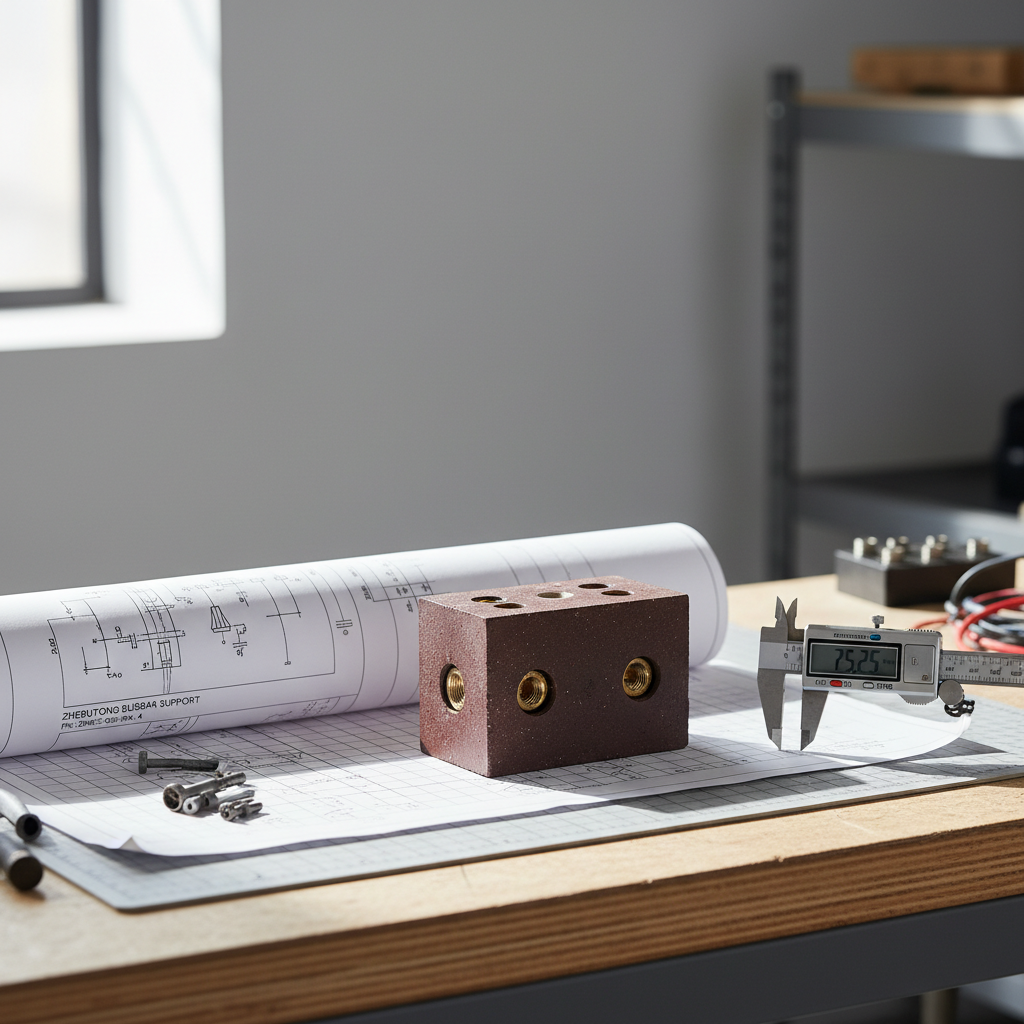
The rapid prototyping process from a busbar support insulator manufacturer's perspective is highly streamlined to keep OEM production schedules on track. We transition from client CAD drawings to a fully tested physical sample with exceptional speed. Our engineering team analyzes the digital models for stress concentrations using finite element analysis, machines precision steel molds via advanced CNC equipment, and produces the initial BMC prototypes for electrical and mechanical validation. This bespoke approach completely eliminates the need for dangerous field modifications. Installers no longer have to resort to makeshift busbar bending, stacking washers, or modifying standard insulators on-site—practices that void warranties and introduce severe safety vulnerabilities. By providing a component that fits perfectly straight out of the box, customization ensures assembly precision and operational safety.

What Is Our Proven Track Record?

Our proven track record is demonstrated by zero-failure operational histories in extreme industrial environments, validated by rigorous third-party auditing and long-term OEM partnerships.

Building absolute trust in the heavy electrical sector requires more than theoretical calculations; it demands verifiable, real-world application data. ZHERUTONG has meticulously tracked the lifecycle of our components in some of the most highly stressed industrial applications globally, from offshore drilling platforms to heavy metallurgical processing plants. The methodology behind our field validations involves continuous feedback loops with facility managers and electrical contractors.

We monitor how our custom insulators perform under continuous thermal cycling, heavy vibratory loads, and actual fault events. This relentless pursuit of quality assurance is backed by rigorous third-party auditing from internationally recognized testing authorities. By maintaining transparent, data-driven relationships with our long-term OEM partners, we have established a reputation for manufacturing components that simply do not fail when the system is pushed to its absolute limits.

How Did We Help European OEMs?

We helped a European renewable energy OEM eliminate phase-to-phase flashovers by engineering a specialized high-clearance BMC insulator that exceeded their stringent fault rating requirements.

A prime example of our engineering capability involves a major wind power infrastructure OEM based in Europe. This client was developing a new generation of high-capacity offshore wind turbines and was facing a critical roadblock during the type-testing phase of their compact nacelle switchgear. The system was designed to handle massive power loads, but it was experiencing repeated catastrophic failures during 120kA dynamic short-circuit testing. The root cause was identified as the brittle nature of the standard insulators they had initially sourced.

The engineering problem was exceptionally complex. The space constraints inside the new compact switchgear meant that standard off-the-shelf supports could not be spaced far enough apart. Consequently, they lacked the necessary creepage distance, leading to devastating arc flashes and phase-to-phase flashovers when the air inside the enclosure became ionized during fault testing. The OEM was facing severe project delays and the potential loss of lucrative infrastructure contracts if they could not pass the type tests.

The ZHERUTONG engineering team immediately intervened to provide a definitive solution. We designed a custom busbar support insulator for high current switchgear applications specifically tailored to the physical envelope of their nacelle panels. Utilizing a proprietary, high-density BMC formula, we engineered a support with a deep-ribbed, undulating geometric profile. This design drastically extended the surface creepage distance without increasing the overall height or width of the insulator. Furthermore, we integrated elongated, high-tensile steel inserts to withstand the massive cantilever forces generated by the 120kA fault.

The result was an overwhelming success. The custom batch of insulators was installed in the prototype switchgear and subjected to the 120kA dynamic short-circuit test. The custom supports passed the test with zero physical deformation, zero thread pull-out, and absolutely no flashovers. Beyond solving the critical safety and compliance issue, the perfect fit of our custom insulators reduced the client's internal assembly time by fifteen percent, ultimately securing their project compliance and protecting their market position.

How To Initiate Your Custom Project?

You can initiate your custom insulator project by sending your dimensional drawings and electrical specifications directly to our engineering team for immediate evaluation.

At ZHERUTONG, our commitment as a highly reliable busbar support insulator manufacturer is entirely dedicated to advancing industrial safety and mechanical precision. We understand that in the realm of high-capacity power distribution, standard components are a liability. Investing in customized, heavily engineered insulation is not an optional upgrade; it is a non-negotiable insurance policy for your high-value switchgear assets and the personnel who operate them.

Do not allow generic supports to be the weak link in your critical electrical infrastructure. We invite procurement officers, panel builders, and senior engineers to collaborate with our technical experts to secure the exact components your specific systems demand. Send your project requirements, technical CAD drawings, or requests for custom physical samples directly to our engineering desk at: rtdq@rtbusway.com. Our team is ready to analyze your fault current parameters and deliver a bespoke solution that guarantees absolute operational integrity.

CONTACT US

If you have any queries, get in touch today! Don't hesitate. We try to take the extra step for our customer satisfaction.
First Name*
Company Name*
Email*
Last Name
Country
Message*
Leave a message
First Name*
Company Name*
Email*
Last Name
Country
Message*